Ask for a haircut in Charlotte and the first real decision happens before you describe a style: clippers, scissors, or both. The tools are not interchangeable shortcuts to the same result. Each one changes the hair's ends, its texture, and how it behaves three weeks later, and the right choice depends on your hair and the look you are after. This checklist walks the decision in order, with the sign that settles each line.
Most finished cuts use both tools somewhere. The question is which tool does the main work on your head.
What each tool actually does
Clippers cut every hair to a uniform length as the guard passes, quickly and evenly. They excel at short sides, fades, tapers, and any shape built on smooth gradation. The ends they leave are blunt and consistent, which is why clipper work looks so crisp in the first week.
Scissors cut hair point by point, in the barber's hand, at chosen angles. A scissor cut can leave varied lengths inside the shape, remove weight from thick hair without shortening it, and follow the curve of the head and the direction of growth. The result is softer edges and movement, at the cost of more time in the chair.
Clipper or scissors: the working checklist
- Target length: Sides at a guard length, roughly an inch or shorter? Clippers pass. Longer, flowing sides? Scissors pass.
- Fade or taper wanted? A smooth blend from skin to length is clipper work by definition. No fade, no requirement.
- Hair thickness: Very thick or bulky hair that needs weight removed without losing length points to scissors and texturizing. Fine hair that needs to look fuller points to blunt clipper ends.
- Texture goal: Soft, natural, grows-in-quietly means scissor finish. Sharp, defined, high-contrast means clipper finish.
- Grow-out tolerance: If you go five or six weeks between cuts, scissor shapes degrade more gracefully. If you come every two weeks, clipper precision stays in its prime window.
- Cowlicks and growth fights: Strong patterns usually behave better with scissor work that can leave strategic length. Uniform clipper length over a whorl often stands up.
- Time and upkeep: Clipper cuts are faster to deliver and simpler to maintain day to day. Scissor cuts ask a little more styling sense at home.
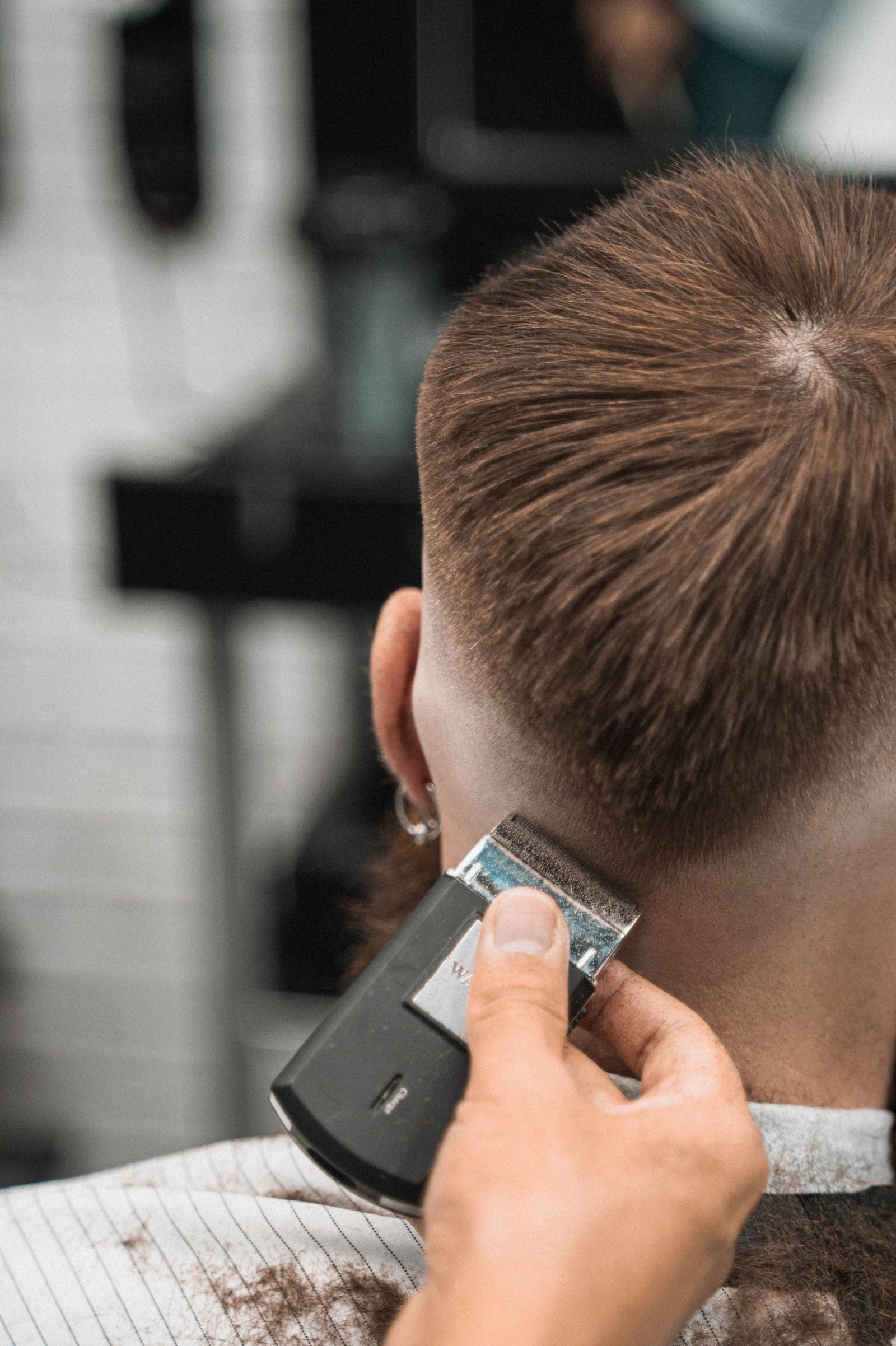
Grow-out is where the difference shows
On day one, a good cut is a good cut either way. The tools reveal themselves over the following weeks. Clipper cuts hold a sharp silhouette, then cross a visible line where the uniform lengths suddenly look overgrown, especially around the ears and neckline. Scissor cuts lose their shape more gradually, softening rather than expiring, which is why men with longer intervals between visits often prefer them.
Neither pattern is a defect. It is scheduling information. A man who books every two weeks at Edward's Boyz Barber Shop can wear the sharpest fade in the shop and never see its ragged phase. A man who books every six weeks and chooses the same fade spends half of each cycle in the ragged phase, through no fault of the barber's.
Texture, thickness, and the ends of the hair
Blunt clipper ends make fine hair look thicker, because every hair ends at full diameter in a clean line. Scissor cutting, especially with texturizing, tapers some ends, which makes thick hair sit lighter and move, but can make already fine hair look wispy if overdone. Curly hair usually reads better with scissor work that respects the curl pattern clump by clump; clippers on curls can cut different curls at different points in their spiral and produce an uneven surface once dry.
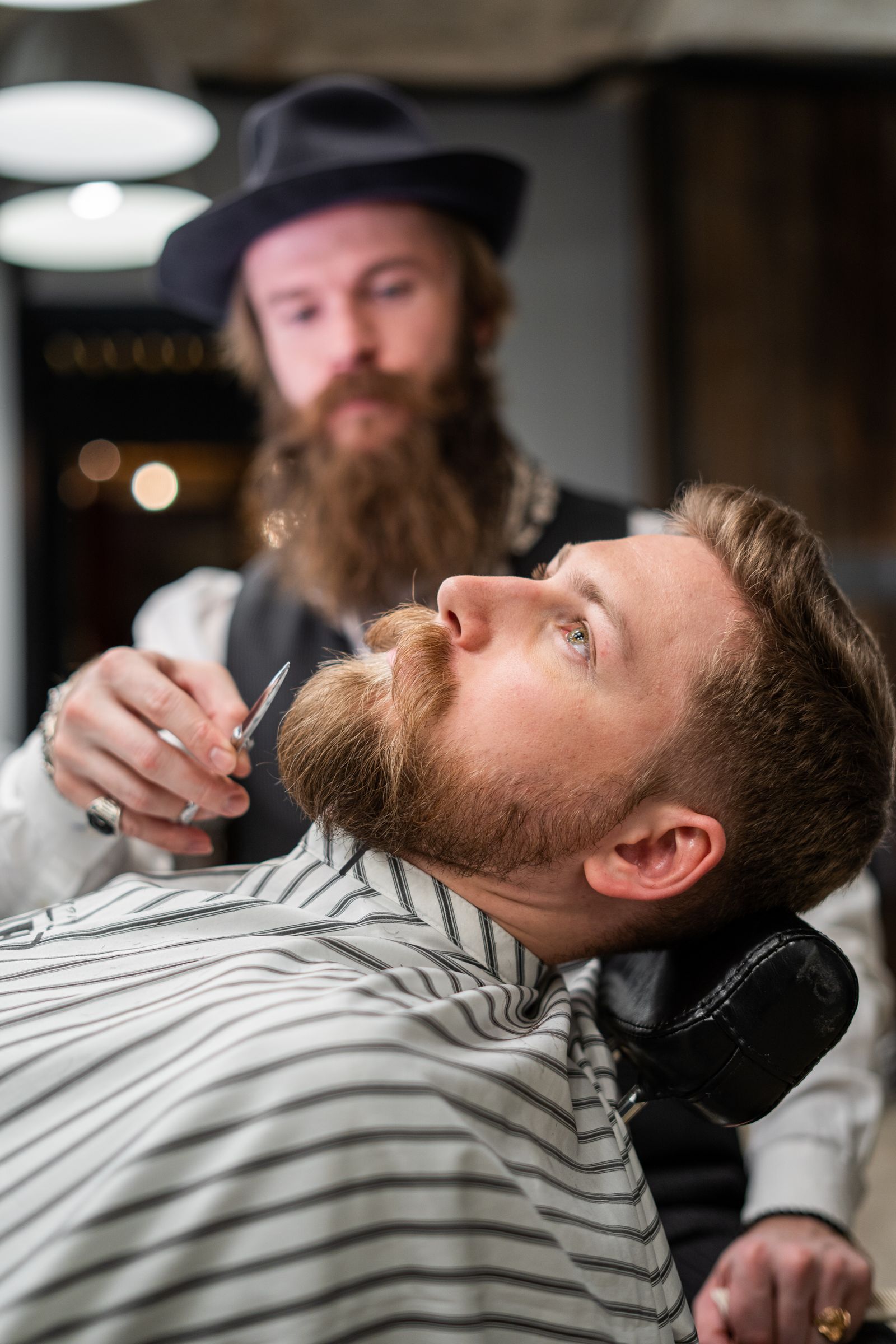
The combination most men actually get
In practice, the standard professional answer is both: clippers for the fade or the short foundation, scissors for the top, the blend, and the texture. If your barber switches tools, that is not indecision; it is the right tool reaching its section. The useful question to bring to the chair is not "clippers or scissors" as a loyalty test. It is "given my hair and how often I come in, where should each one do the work?" A barber who can answer that in plain terms is a barber who has read your head correctly.
Common questions
Do clippers damage hair more than scissors?
No. A maintained clipper with a clean blade cuts as cleanly as scissors. Damage claims usually trace to dull blades of either kind, which crush rather than cut and leave ends that split sooner.
Which cut lasts longer between appointments?
Scissor cuts usually look acceptable longer because they soften as they grow. Clipper cuts and fades look sharper at their peak but need tighter intervals, often every two to three weeks.
Can I get a natural-looking cut with clippers?
Yes, with longer guards and scissor work to soften the top and edges. Pure clipper cuts at short lengths will always read crisper and more uniform, which some men prefer.
Photos in this guide are representative stock images.
← All guides from Edward's Boyz Barber Shop← Back to Edward's Boyz Barber Shop